
Geothermal energy is not a new phenomenon; in fact, it is as old as the Earth itself. This geothermal motor is already 4.5 billion years old and has completely transformed the Earth, from plate tectonics and volcanoes to the creation of life itself. Without the power of geothermal energy, we wouldn’t be here, nor would we be learning about geothermal borefield design. So, before we start this niche course, let’s take a brief walk through history.
4.28 Ga BC – The creation of life
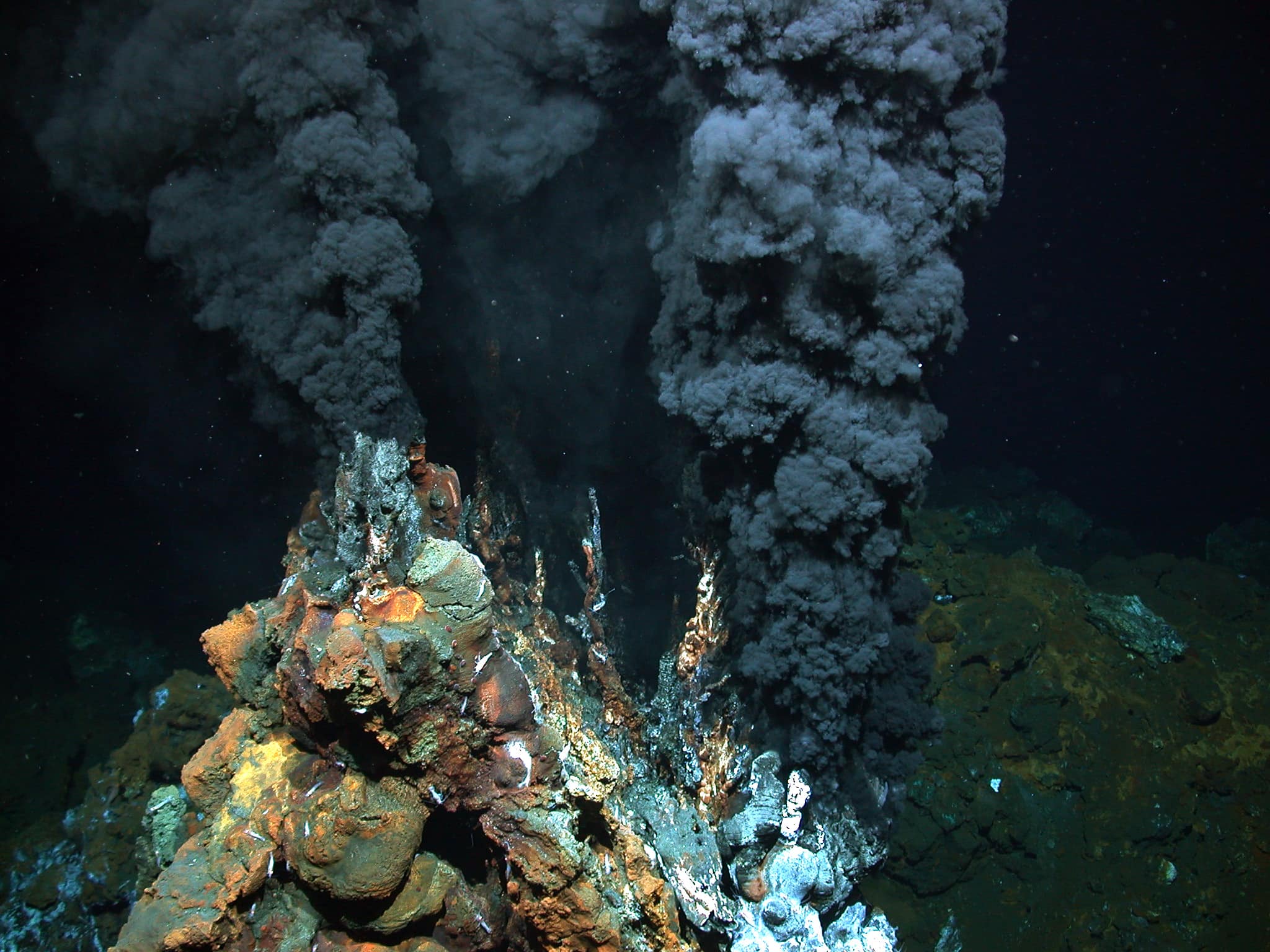
Not long after the Earth formed, the first oceans began to appear. It is here that our story begins: at the bottom of these earliest oceans, where water comes into contact with the Earth’s hot crust. It is believed that the first form of life emerged from the initial creation of life in the hydrothermal sources where hot water is expelled from the earth’s pores.
Driven by geothermal heat and other geochemical processes, the conditions were ideal for creating the first essential building blocks of life: amino acids. The porous mineral structure of the seafloor provided an ideal environment in which to protect these first chemical reactions before cell structures were formed.
10.000 BC – Spiritual life
Millions of years later, after surviving meteor showers and mass extinctions, life evolved and the human race began to walk the Earth’s surface. In this early civilisation, our ancestors wondered at the beauty of creation to such an extent that they believed it was imbued with divine and spiritual power. These nature religions worshipped great natural phenomena such as hot water springs, which were driven by geothermal power underneath.
In addition, these hot springs were also places where people met, where diplomacy was practised and where they used them for practical things like cooking and bathing.

500 BC – Classical antiquity
Many years later, we arrive at the great civilisations of the Greeks and Romans. Here, nature religions had mostly been replaced by traditional polytheistic religions, although some early aspects remained. For example, the Greeks believed that their gods lived at the top of Mount Olympus, and that Hephaestus (or Vulcan, if you prefer the Latin name), the god of fire and the forge, worked under volcanic mountains such as Mount Etna.
In these societies, geothermal energy played a role in many aspects of life. In the 5th century BC, the Greek physician Hippocrates, known as the father of modern medicine, wrote about the health benefits of hot and cold baths, describing the organoleptic and chemical properties of the water.
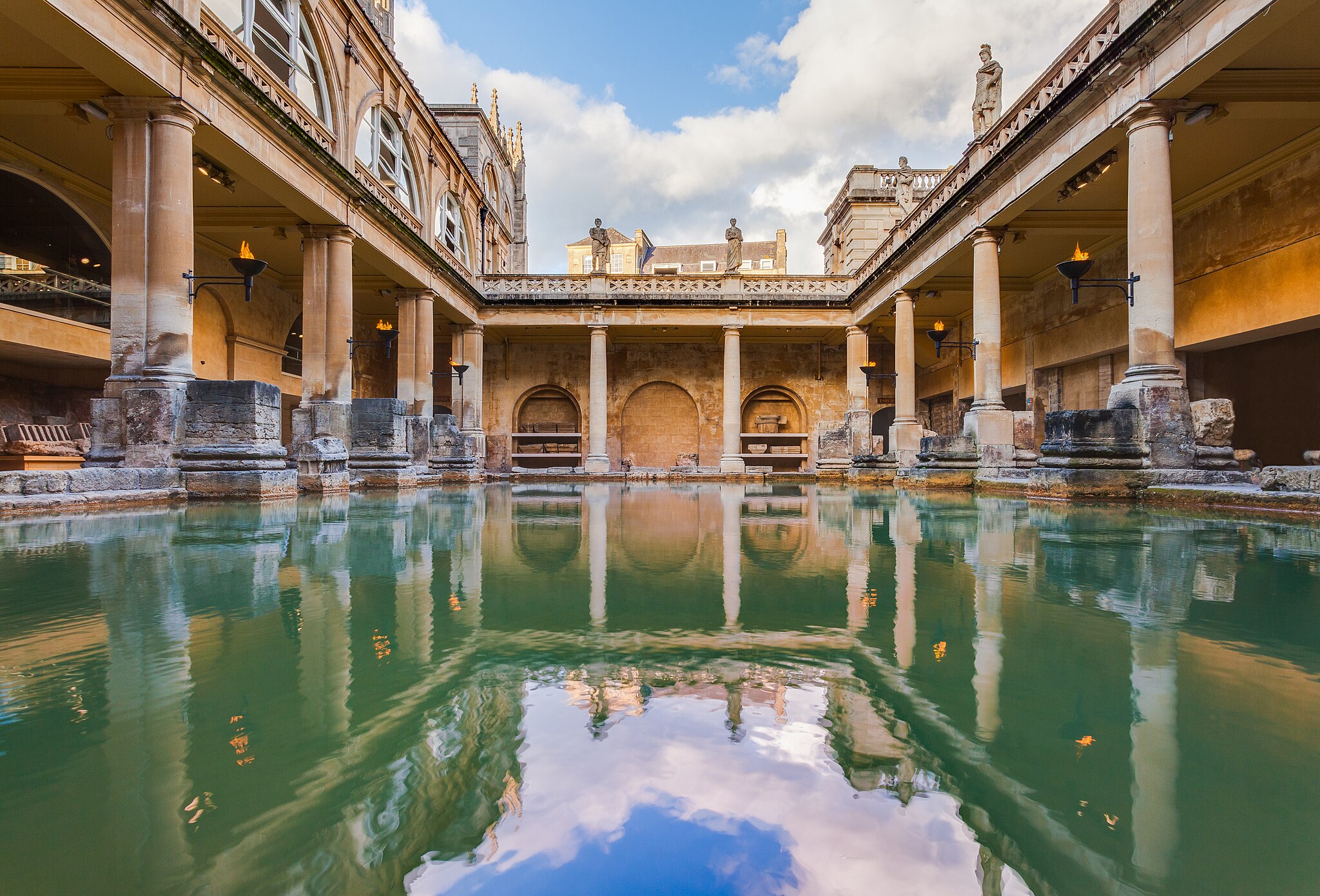
In Roman times, bath houses were built with different warm and cold water baths. Although some used the concept of the hypocaust system, where the water was heated by a fire underneath, this system was not used very often due to the high cost of slavery. More often than not, they were built in places where there were natural hot springs, such as in Bath, England, where the hot spring was dedicated to the goddess Minerva. The Roman writer Pliny the Elder even wrote about the health benefits of these mineral baths for people suffering from muscle, joint or paralytic ailments.
1332 – Geothermal heating
The small village of Chaudes-Aigues in France has one of the hottest natural springs in Europe, with temperatures reaching 82°C. While most people in the Middle Ages heated their houses using cheap fuels such as wood, here they used the hot springs, making these some of the world’s first geothermally heated houses. The system was later extended to provide geothermal heating for the entire village.

1818 – Industrialization
The first industrial application of geothermal energy did not emerge until the beginning of the 19th century. In 1818, the French engineer François Jacques de Larderel discovered how to extract boric acid from hot springs in Tuscany. This boric acid was required for the production of glass and other goods that had previously been imported.
Previously, boric acid was produced by placing the hot liquid above a fire and allowing the water to evaporate. This process required a lot of wood, which led to rapid deforestation. Larderel was the first to use geothermal steam as a heat source by installing a dome over the vents. His method was so successful that he became the leading producer of boric acid, and the place in Italy was named after him.

1913 – First electricity production
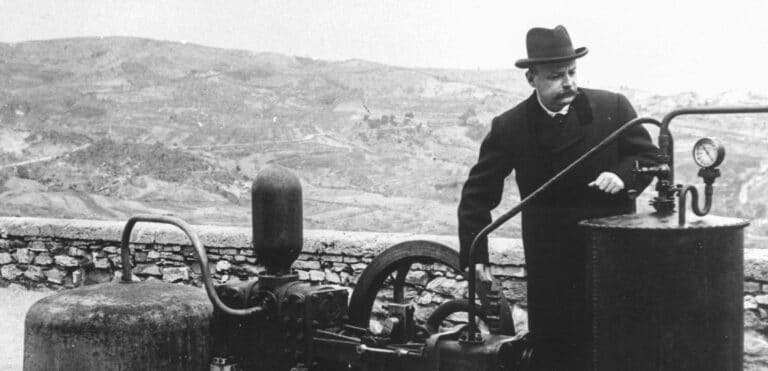
It is in this same place, now called Larderello, that people produced the first geothermal electricity. In 1904, Piero Ginori Conti used a small geothermal generator to power the first light bulb with only geothermal heat. The first official geothermal power plant opened in 1913. Today, there are more than 20 power plants at this site, generating electricity from over 350 steam wells with an output of 4.8 GWh/year.
1970 – Ground source heat pumps
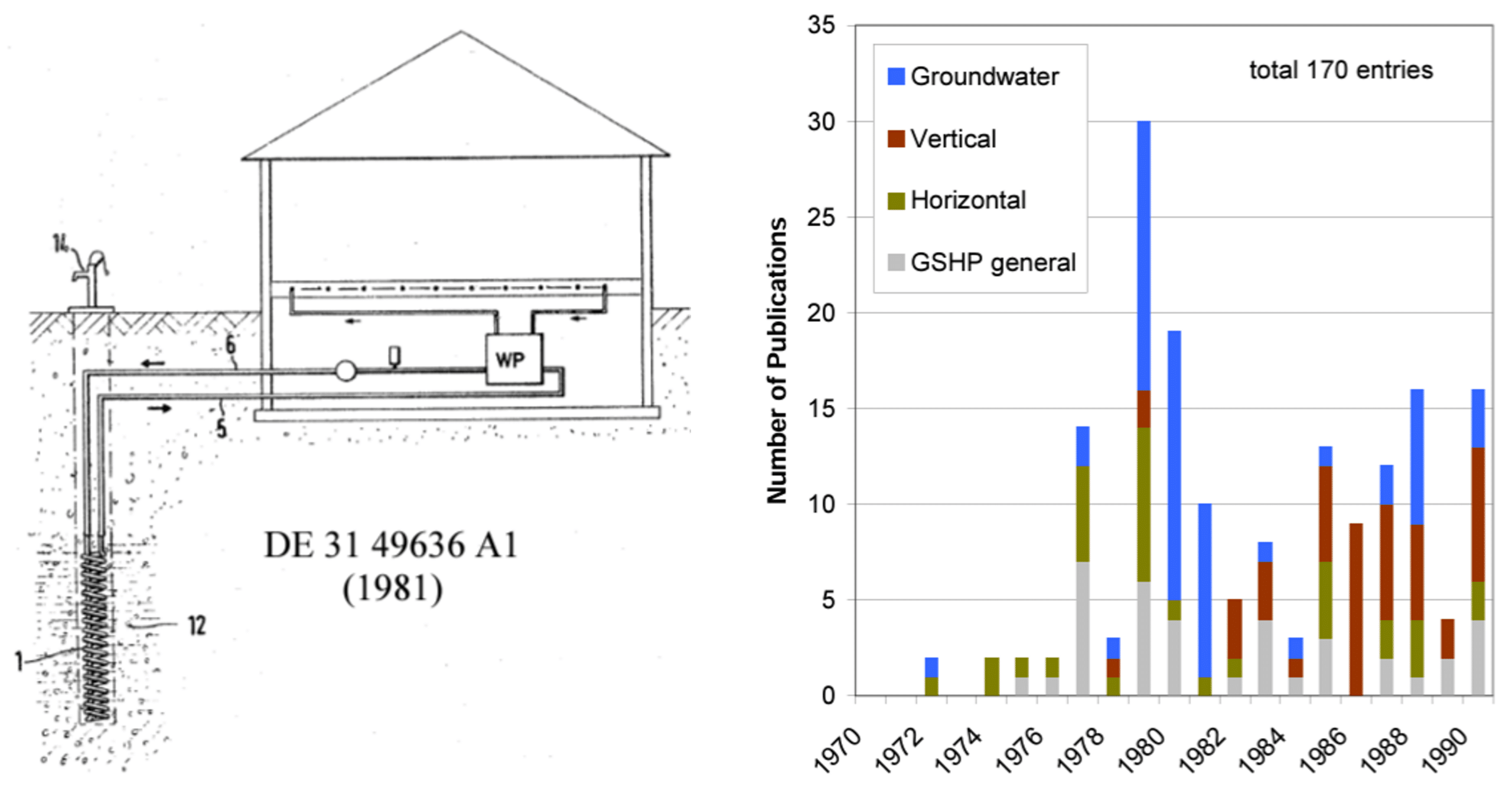
And finally, after billions of years, we come to our beloved ground source heat pumps. From 1979 onwards, an increasing number of publications appeared on the use of vertical shallow geothermal boreholes for heating buildings. A patent filed in Germany in 1981 looks remarkably similar to the ground source heat pumps we install today. So in the end, our ‘new’ technology is already more than 40 years old. This is not a negative thing. It is proof that the technology works.
Today
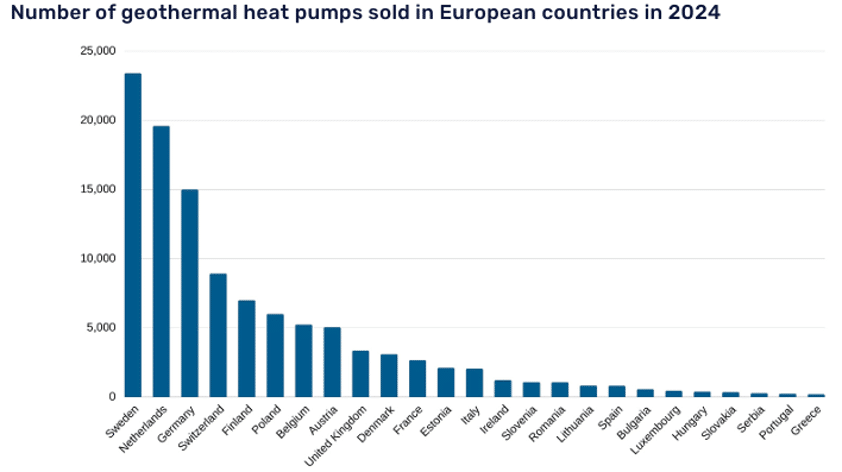
We are now in 2026. The technology is mature. The market is growing. Shallow geothermal borefields are a promising technology that can help with the energy transition and decarbonise heating and cooling in our buildings. Currently, there are over 2.43 million ground source heat pumps in Europe (most of which are connected to a vertical borehole), with over 100,000 units sold every year.
Future?
Clearly, we have a long history with geothermal energy, and it is certainly not going to disappear any time soon. Interest in both deep and shallow geothermal systems is growing, although the market is not expanding quickly enough to combat the climate crisis. Ground source heat pumps face strong competition from cheaper solutions, such as air-source heat pumps. But is that really the case?
Before we jump into the design of borefields, let us take a closer look at why you should opt for a ground source heat pump in our next chapter, which you can find here.
References
- https://vito.be/en/geothermal-energy/geothermal-energy-history [last visited: 21/01/2026]
- https://www.history.alberta.ca/energyheritage/energy/alternative-energy/geothermal-energy/geothermal-energy-throughout-the-ages.aspx [last visited: 21/01/2026]
- https://www.geothermal-dhc.eu/News/Details?id=20 [last visited: 21/01/2026]
- Dickson and Fanelli. (1996). Non-electric uses of geothermal energy in Italy. Proceedings 18th NZ Geothermal Workshop.
- Sanner B. (2016). Shallow geothermal energy – history, development, current status and future prospects. Proceedings of the European Geothermal Congress 2016, 19-24 Sept, Strasbourg, France
- Gianfaldoni S, Tchernev G, Wollina U, Roccia MG, Fioranelli M, Gianfaldoni R, Lotti T. History of the Baths and Thermal Medicine. Open Access Maced J Med Sci. 2017 Jul 23;5(4):566–8. doi: 10.3889/oamjms.2017.126. PMCID: PMC5535692.